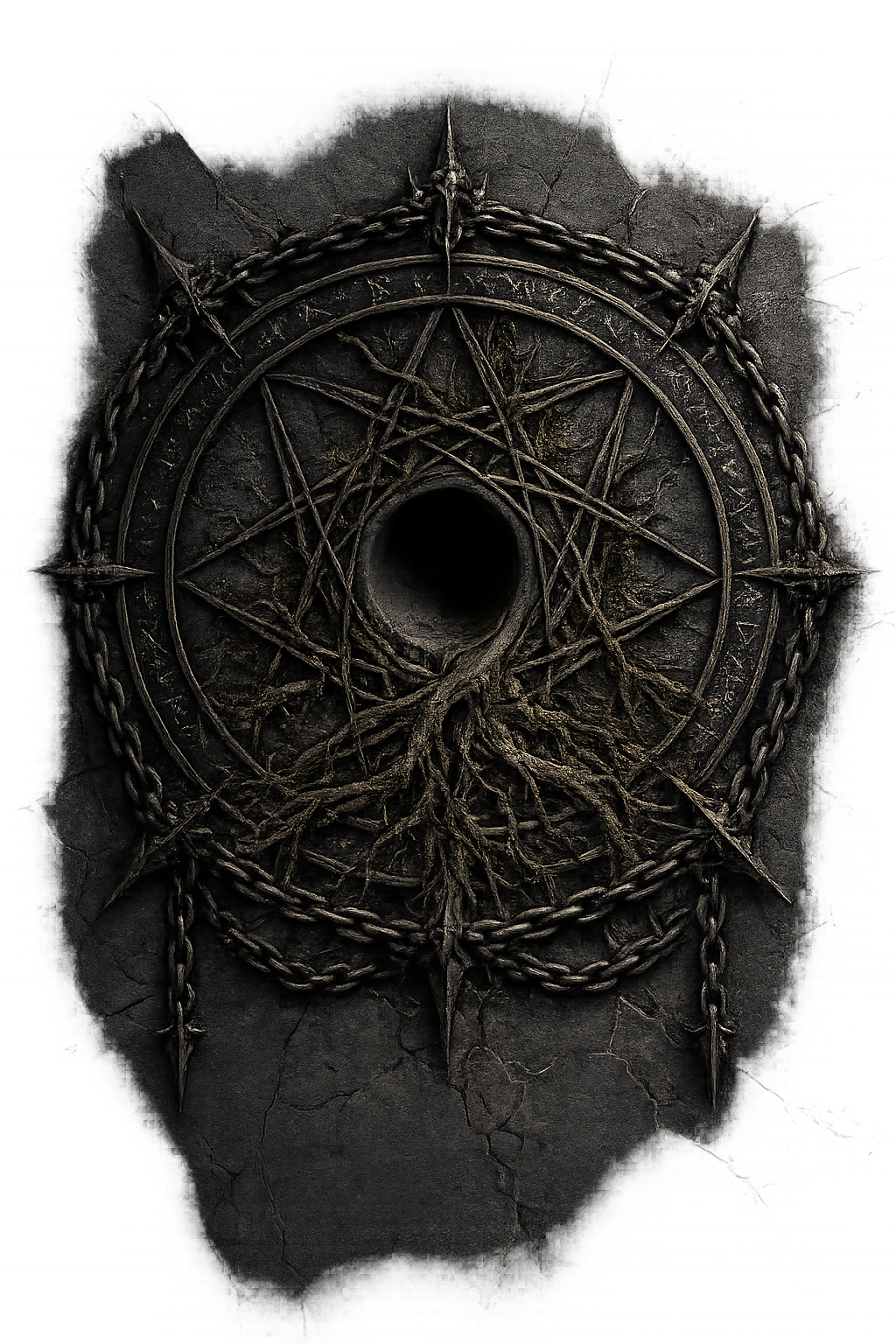
Haesa

The Last High Priest.
There are monsters who wear fangs.
There are monsters who wear crowns.
And there are monsters who wear robes.
Haesa belonged to the last category.
As the final High Priest of the Chapel, Haesa stood at the center of an institution that claimed to protect the world while feeding upon the vulnerable. He preached order, obedience, and sacrifice. His followers called him devoted.
History calls him something else.
For years, Haesa oversaw Chapel operations with absolute conviction. Every doctrine, every punishment, every ritual passed through his authority. He believed completely in the Chapel’s right to decide who mattered and who did not.
Among his greatest crimes was what he did to Vu.
As a child, Vu was taken by the Chapel and transformed into a vessel for forces she could neither understand nor consent to. Haesa supervised the implantation of the broken relic gem into her chest, treating a living child as little more than a component in a divine experiment.
Pain was necessary.
Fear was necessary.
Loss was necessary.
At least, that was what he told himself.
Under Haesa’s leadership, abuse became policy. Cruelty became procedure. Trauma became doctrine. Entire generations suffered beneath systems he helped maintain, all while he convinced himself he was serving a higher purpose.
Even after the Chapel began to collapse, Haesa refused to surrender control.
When Vu survived.
When kingdoms turned against the Chapel.
When truth began emerging from beneath centuries of lies.
Haesa’s response was not remorse.
It was escalation.
He sought to reclaim authority over Vu, convinced that she remained Chapel property regardless of what she had become. To him, her survival was not evidence of her humanity.
It was evidence that the experiment had worked.
His downfall came swiftly.
As investigations mounted and the possibility of public trial grew closer, Haesa became a liability—not only to his enemies, but to the institution he had spent his life serving.
The Chapel understood something Haesa never did:
Dead men tell fewer truths.
Before he could stand trial.
Before victims could confront him.
Before the full extent of his crimes could become public record.
Haesa was assassinated by the Chapel itself.
Silenced.
Discarded.
Sacrificed by the very machine he had helped build.
Some considered it justice.
Others considered it cowardice.
Vu was denied the opportunity to face him in a court of law.
The world was denied answers.
And Haesa was denied the illusion that loyalty would save him.
Among survivors of the Chapel, a bitter saying remains:
“He taught us that people were expendable.”
“In the end, he was correct.”
The Chapel’s final victim may have been one of its greatest architects.
No one mourned him.
Very few forgave him.
History remembers him for what he truly was:
Not a holy man.
Not a prophet.
Not a servant of the divine.
Simply a man who chose doctrine over humanity—
and destroyed countless lives in the process.